History and Social Studies
Geography, historical thinking and civic understanding

Grades 1–12
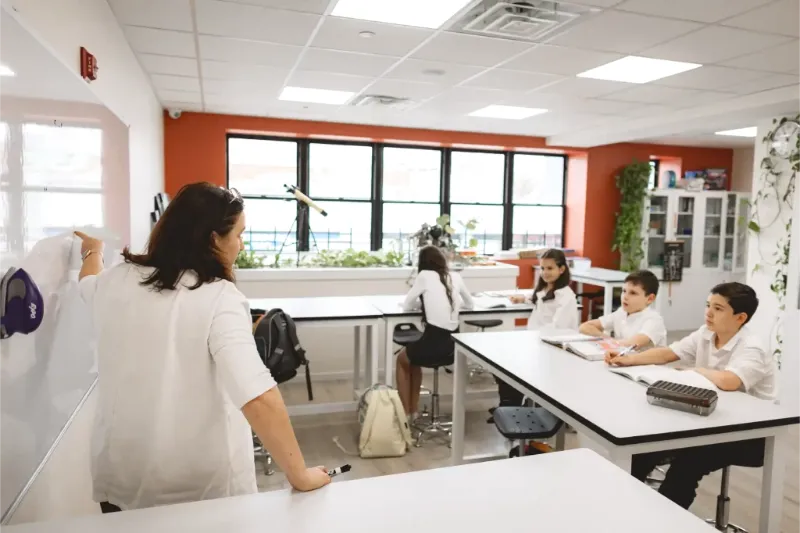
Mission & Overview
Our History and Social Studies curriculum guides students from their first lessons about maps and communities in the early grades through Regents-level Global History and U.S. History courses in high school — building citizens who think critically, read evidence carefully, and understand how the past shapes the present.
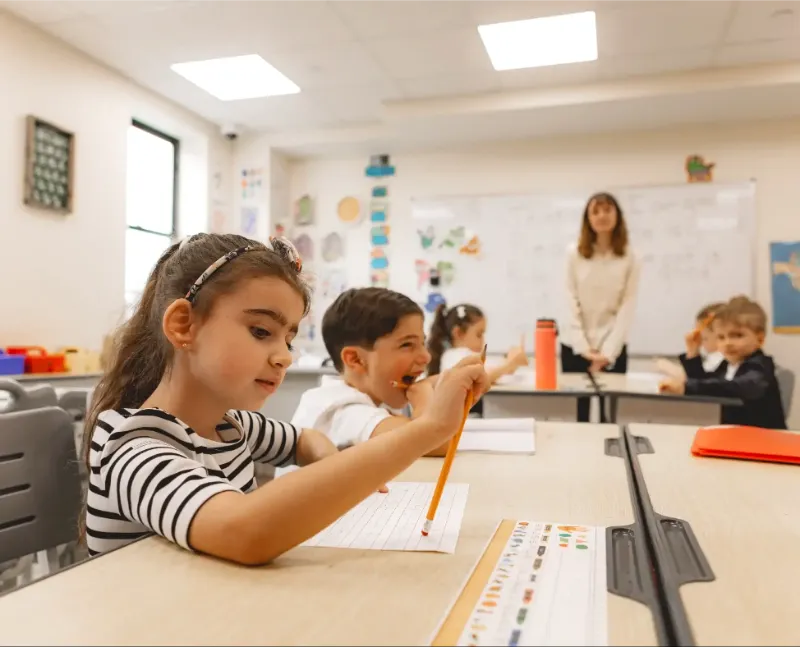
Grade Span
1 through 12
Core Courses
Social Studies (1–6) • Global History & Geography II (8–9) • U.S. History & Government (10–12)
Format
Teacher-guided lessons • discussion • maps, charts & primary sources • projects
Standards
Aligned to the NYS Social Studies Framework; Regents exam skills embedded from Grade 8
Elementary Social Studies
Each grade builds on the last — from the seven continents to the structure of American government — through stories, maps, discussion and hands-on projects.
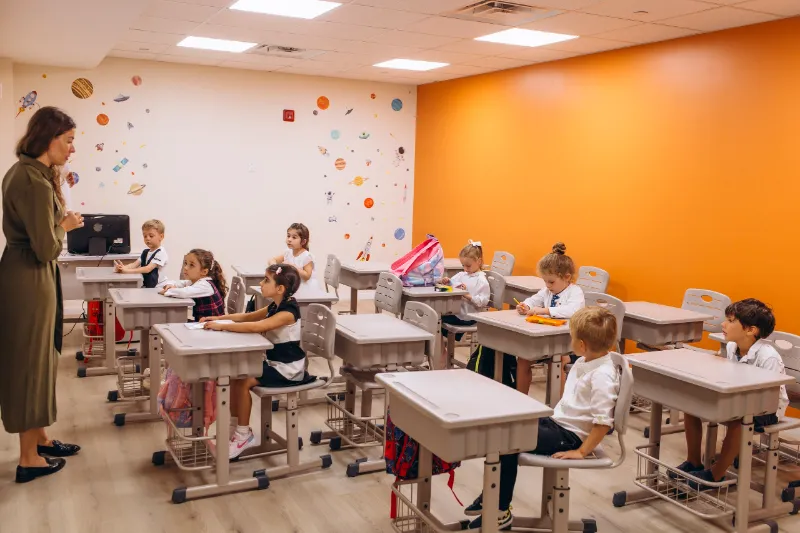
1-2 Earth's Geography & the World Grades 1–2
The seven continents and five oceans, maps and the compass rose, countries around the world, and the Wonders of the Ancient and Modern World.
2-3 Citizens, Government & Community Grades 2–3
Roles of citizens and leaders, community and state government, land and resources, early America, and the marketplace — producers, consumers, and trade.
3-4 Communities Through Time Grades 3–4
Communities near and far, physical and human geography, how communities change over time, citizenship and government, and cultures around the world.
4-5 Colonial America to a Growing Nation Grades 4–5
Native American nations, the Age of Exploration, the Thirteen Colonies, the American Revolution, the Constitution, and the coming of the Civil War.
5-6 Civil War to the Present Grades 5–6
U.S. geography, the Civil War & Reconstr uction, industrialization, the World Wars, the Great Depression, the Cold War, and the United States today.
Skills Built Every Year
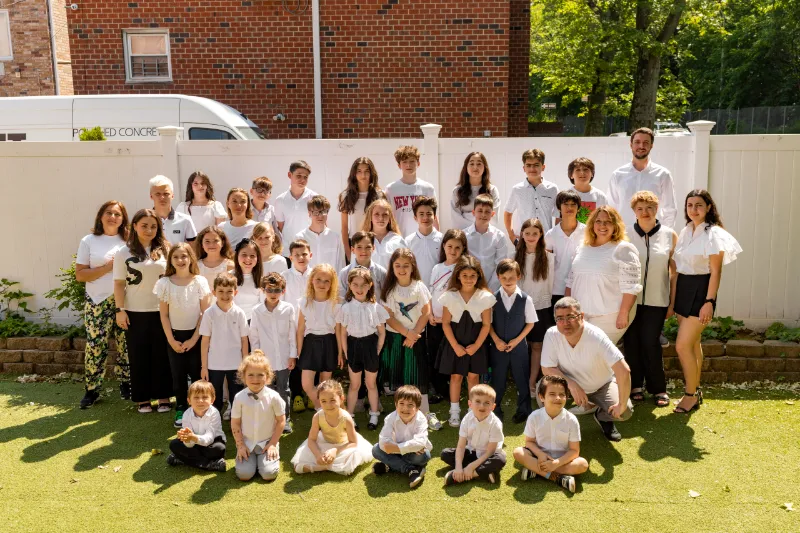
Geography Skills
- Reading maps & globes
- Using a compass rose
- Latitude & longitude
- Physical & political maps
Chart & Data Skills
- Reading bar & line graphs
- Pictographs & pie charts
- Tables and timelines
Reading & Thinking
- Cause and effect
- Compare and contrast
- Main idea & details
- Making inferences
Research & Analysis
- Primary vs. secondary sources
- Analyzing photos & documents
- Using reference materials
- Summarizing & note-taking
Courses
4 courses, each with its units of study. Pick a course to see it.
World History
A year-long survey of world history from early civilizations to the present day, based on the course textbook Discovering Our Past — A History of the World.
- 1What Historians Do & the Study of Geography, Economics, Citizenship
- 2Early Humans, the Agricultural Revolution & Mesopotamia
- 3Ancient Egypt, Kush & the Israelites
- 4Ancient Greece
- 5Ancient India & Early China
- 6Rome: Republic to Empire & Roman Civilization
- 7Rise of Christianity & Islamic Civilization
- 8African Civilizations, the Americas & Imperial China
- 9Korea, Japan, Southeast Asia & Medieval Europe
- 10Renaissance, Reformation & the Age of Exploration
- 11Scientific Revolution, Enlightenment & Revolutions
- 12Imperialism, the World Wars & the Cold War
Every chapter builds skills through Thinking Like a Historian and Biography features, Visual Literacy activities, and guided questions — the same inquiry skills used in the Regents-level courses. GRADES 8–9 • REGENTS COURSE
Global History & Geography II
A comprehensive study of world history from approximately 1750 to the present, preparing students for the NYS Global History and Geography II Regents Examination.
- 1Enlightenment & the Age of Revolutions (1750– 1825)
- 2Industrial Revolution & Social Change
- 3Nationalism & Nation-Building
- 4Imperialism & Global Expansion
- 5World War I & the Transfor mation of Europe
- 6Russian Revolution & the Rise of Communism
- 7The Great Depression & Rise of Dictators
- 8World War II & the Holocaust
- 9Cold War & Global Conflict
- 10Decolonization & Independence
- 11Human Rights & Global Conflicts
- 12Globalization & the Modern World
Students practice Constructed Response Questions (CRQs) and the Enduring Issues Essay, and analyze primary sources, maps, and political cartoons throughout the year. GRADES 10–12 • REGENTS COURSE
U.S. History & Government
A chronological study of the United States from the colonial period to the present, preparing students for the NYS U.S.
History and Government Regents Examination.
- 1Colonial Foundations & the Road to Revolution (1607–1783)
- 2Constitutional Foundations (1781–1824)
- 3Expansion, Reform & a Nation Divided (1800–1877)
- 4Industrialization, Urbanization & the Gilded Age (1865–1900)
- 5Progressive Era & Emergence as a World Power (1890–1920)
- 6Prosperity, Depression & the New Deal (1920–1939)
- 7World War II & the Early Cold War (1939–1960)
- 8Civil Rights, Great Society & the 1960s–70s
- 9Modern America: Reagan to the 21st Century (1980–Present)
Projects include a Constitutional Convention simulation, a Civil Rights Movement source analysis, and a research project on a major issue shaping the U.S. since 1980.
Historical Thinking Skills
- 1Chronological Reasoning Placing events in historical context
- 2Cause and Effect Explaining why events happened and what resulted
- 3Continuity and Change Identifying what changed and what remained the same
- 4Comparison Comparing people, events, movements, and periods
- 5Contextualization Understanding events within their broader setting
- 6Primary Source Analysis Examining speeches, laws, photographs, and maps
- 7Evidence-Based Writing Making claims and supporting them with evidence
- 8Geographic Reasoning Analyzing maps and geography's role in history
- 9Data Analysis Interpreting graphs, charts, and statistics
- 10Historical Argumentation Evaluating competing interpretations of events
Assessment & Grading
Grades Reflect Consistent Effort and Growth Across the Year, Not a Single Test.
- 25% — Homework
- 25% — Class Participation
- 25% — Tests & Quizzes
- 15% — Projects & Presentations
- 10% — Attendance & Behavior
Students Are Also Evaluated Through
- Classwork & written responses
- Map, chart & timeline activities
- Document-based questions (DBQs)
- Unit and Regents-style reviews
- Class discussions & debates

What Makes Us Unique
Small classes with individual attention to every student's reasoning and writing Regents exam skills built in from Grade 8 — not crammed at the end Primary sources, maps, and documents used from the earliest grades Projects and simulations that connect history to real decision-making A safe, supportive environment where questions are always welcome From the seven continents to the U.S. Constitution — one continuous history education, K through 12.
Meet Our Faculty
Explore Our Academic Programs
English Language Arts →Mathematics →Science →Russian Language and Literature →
See BSE in Person.
Tours run on school days, so you see real classes. Bring your child; we'll meet them too.