Russian Language and Literature
Heritage speakers and Russian as a second language
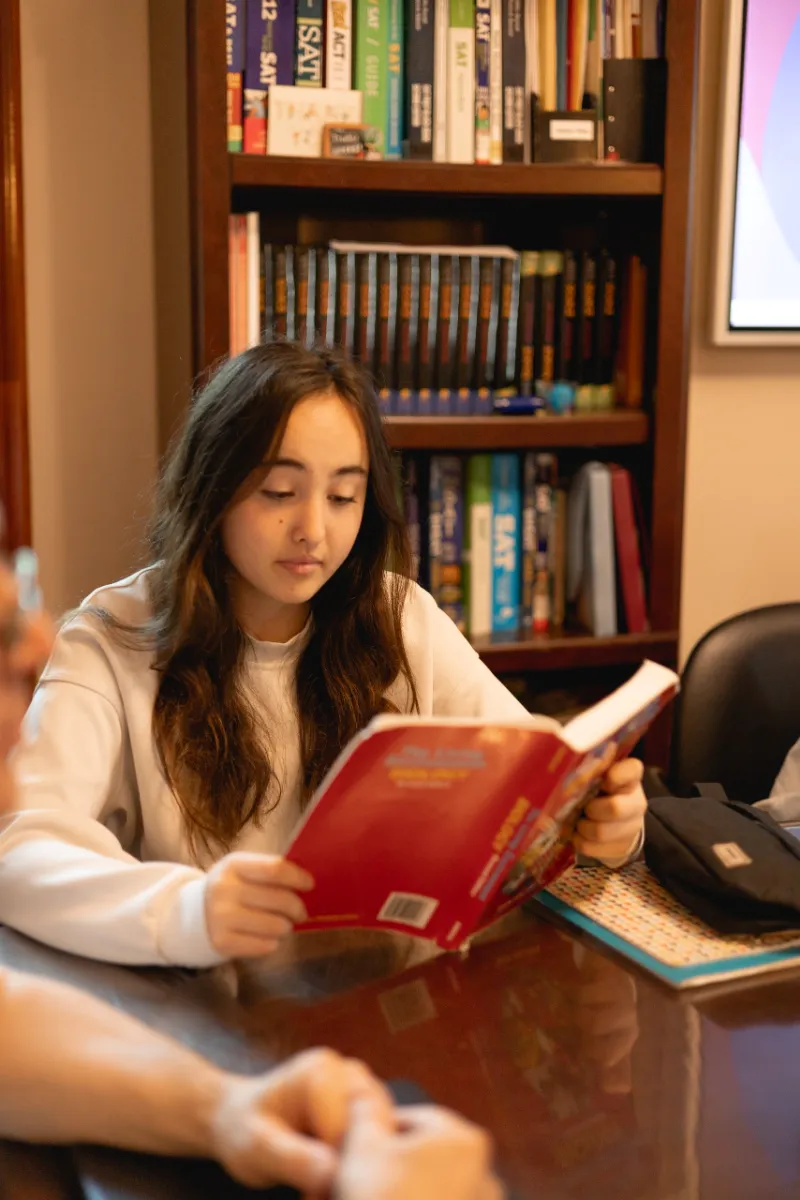
Grades 2–12
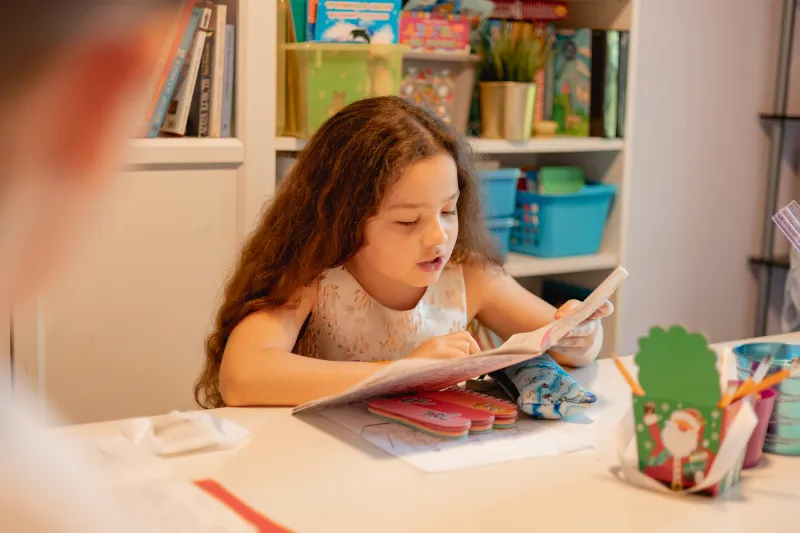
Mission & Overview
Our Russian program serves two kinds of learners — students building the language from scratch, and heritage speakers deepening fluency in the language of their family — nurturing literacy, culture, and identity from Grade 2 through high school.
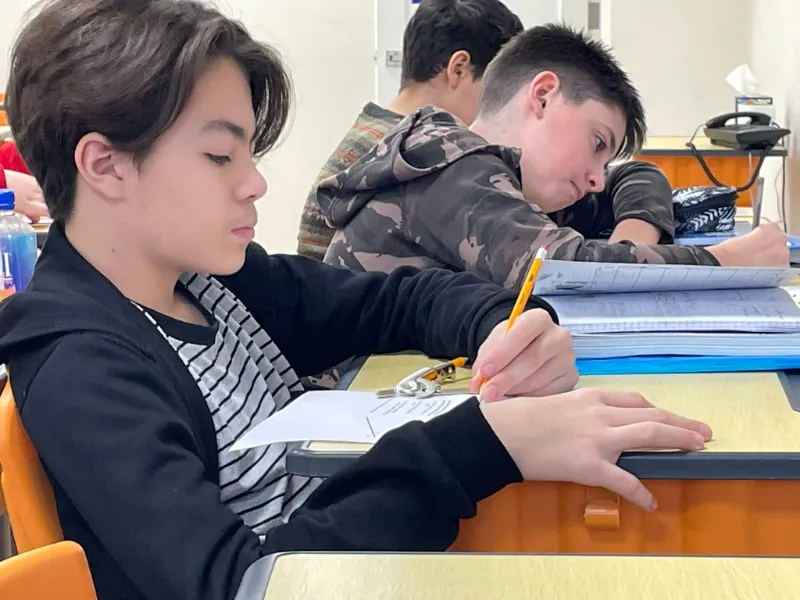
Grade Span
Grade 2 through Grade 12
Two Tracks
RSL – Russian as a Second Language (Grades 2–5) • Heritage Speakers (Grades 2–12)
Core Strands
Reading & Literature • Writing • Oral Speech • Vocabulary • Grammar
External Benchmarks
ACTR Russian Olympiad • AP Russian Language & Culture • Seal of Biliteracy
Russian as a Second Language
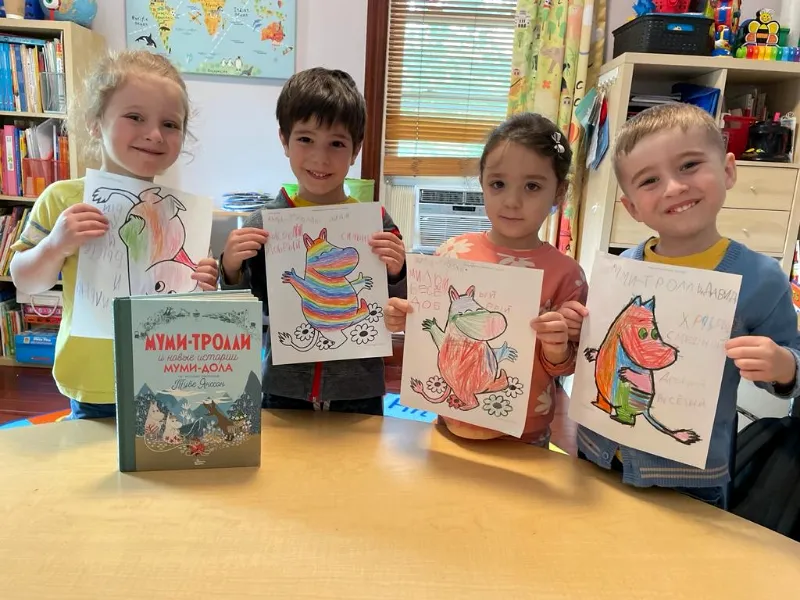
For students who began learning Russian last year — building the alphabet, everyday vocabulary, and confidence speaking in simple phrases.
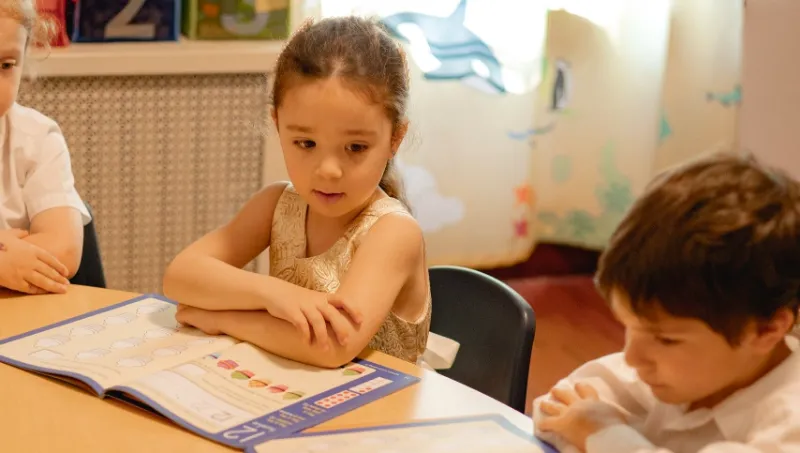
Writing
Repeating letters, sounds, and syllables; tracing the alphabet; copying words and short sentences; matching pictures with words.
Reading & Listening
Listening to songs, stories, and poems; telling short stories from pictures; memorizing short poems.
Speech
Introducing oneself, answering simple questions, and speaking in 2–6 word phrases; songs, rhymes, role-play, and storytelling.
Grammar
Vowels & consonants; singular/plural nouns; adjectives, prepositions, and pronouns; gender and case of nouns.
Vocabulary themes: Family & Home • Food & Drinks • Holidays • Travel • Daily Routine • School & City Life
Heritage Speakers: Elementary
For students who already read and understand Russian at home — deepening literature, composition, and grammar year by year.
2-3 Text Interpretation & Expression Grades 2–3
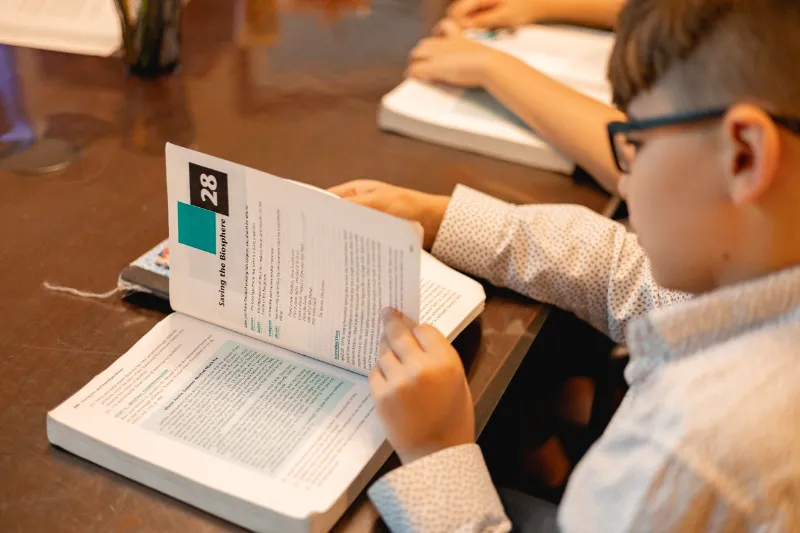
Analyzing characters and plot; cursive penmanship; picture-based writing; dramatization of studied works.
3-4 Reading Fluency & Composition Grades 3–4
Book reports and summaries; dictations for spelling; expressive poetry recitation.
4-6 Beginner to Academic Fluency Grades 4–6
For newer students: alphabet mastery through leveled reading; stretch content adds literary analysis and journalistic texts.
4-6
Orthography & Literary Foundations Grades 4–6 Adv.
Advanced spelling rules (roots, prefixes, suffixes, case endings); deeper literary reading, speech, and vocabulary work.
Skills Built Every Year
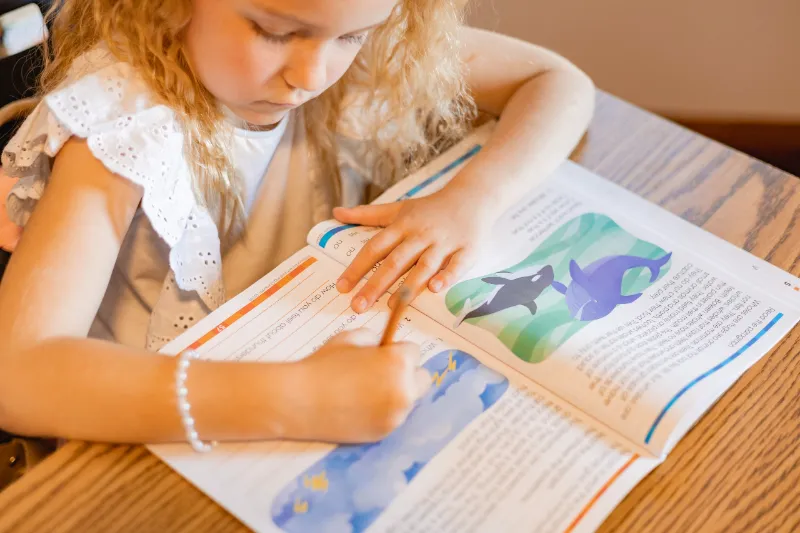
Reading & Literature
- Fables, poems & short stories
- Character & plot analysis
- Expressive recitation
Writing
- Cursive penmanship
- Summaries (Izlozhenie)
- Dictations (Diktanty)
Oral Speech
- Retelling & discussion
- Picture-based storytelling
- Mini-presentations
Grammar
- Parts of speech & syntax
- Case system (Padezhi)
- Spelling rules & orthography
- Synonyms & antonyms
High School Heritage Program
Intermediate (9–12)
- Reading fluency & comprehension
- Listening & spoken production
- Writing & Cyrillic typing
- Core grammar & thematic vocabulary
- Cultural literacy: poetry, music, film
Advanced (8–12)
- Advanced composition & essays
- 19th–century to modern literature
- Socratic seminars & debate
- Complex grammar & syntax
- Etymology, stylistics & rhetoric
Both levels prepare students for the ACTR Russian Olympiad and AP Russian Language and Culture exam; the Advanced course also targets the Seal of Biliteracy.
Pathways to Certification
ACTR Russian Olympiad
A national assessment of Russian proficiency. Students practice self-description, picture description, and spoken response tasks that mirror the Olympiad's spoken portion.
AP Russian Language & Culture
A college-level exam (NEWL) assessing interpersonal and presentational writing and speaking. Coursework builds directly toward its reading, writing, and speaking tasks.
Seal of Biliteracy
A nationally recognized credential documenting proficiency in two or more languages, awarded upon passing an approved assessment — valuable for college applications, scholarships, and careers.
Assessment & Grading
Rsl & Grades 2–3
- 30% — Participation
- 30% — Group Work
- 20% — Tests & Quizzes
- 20% — Homework
Grades 3–6 Heritage
- 20% — Participation
- 20% — Projects
- 30–35% — Assessments
- 25–30% — Homework
Grades 8–12 (HS)
- 20% — Participation
- 20% — Projects
- 30% — Assessments
- 15% — Homework
- 15% — Final Exam
What Makes Us Unique
Two dedicated tracks — new learners and heritage speakers each get the right starting point
One continuous path from first letters to AP Russian and the Seal of Biliteracy
Culture woven throughout — poetry, music, and film alongside grammar and literature
Direct preparation for the ACTR Olympiad and AP Russian exam, not last-minute cramming
Small classes with individual feedback on writing, speaking, and recitation
From the first letters to the Seal of Biliteracy — one continuous path to a heritage language.
Meet Our Faculty
Explore Our Academic Programs
English Language Arts →Mathematics →Science →History and Social Studies →
See BSE in Person.
Tours run on school days, so you see real classes. Bring your child; we'll meet them too.